Endosomal Escape: The 1 – 2 % Problem Blocking a $100B Market
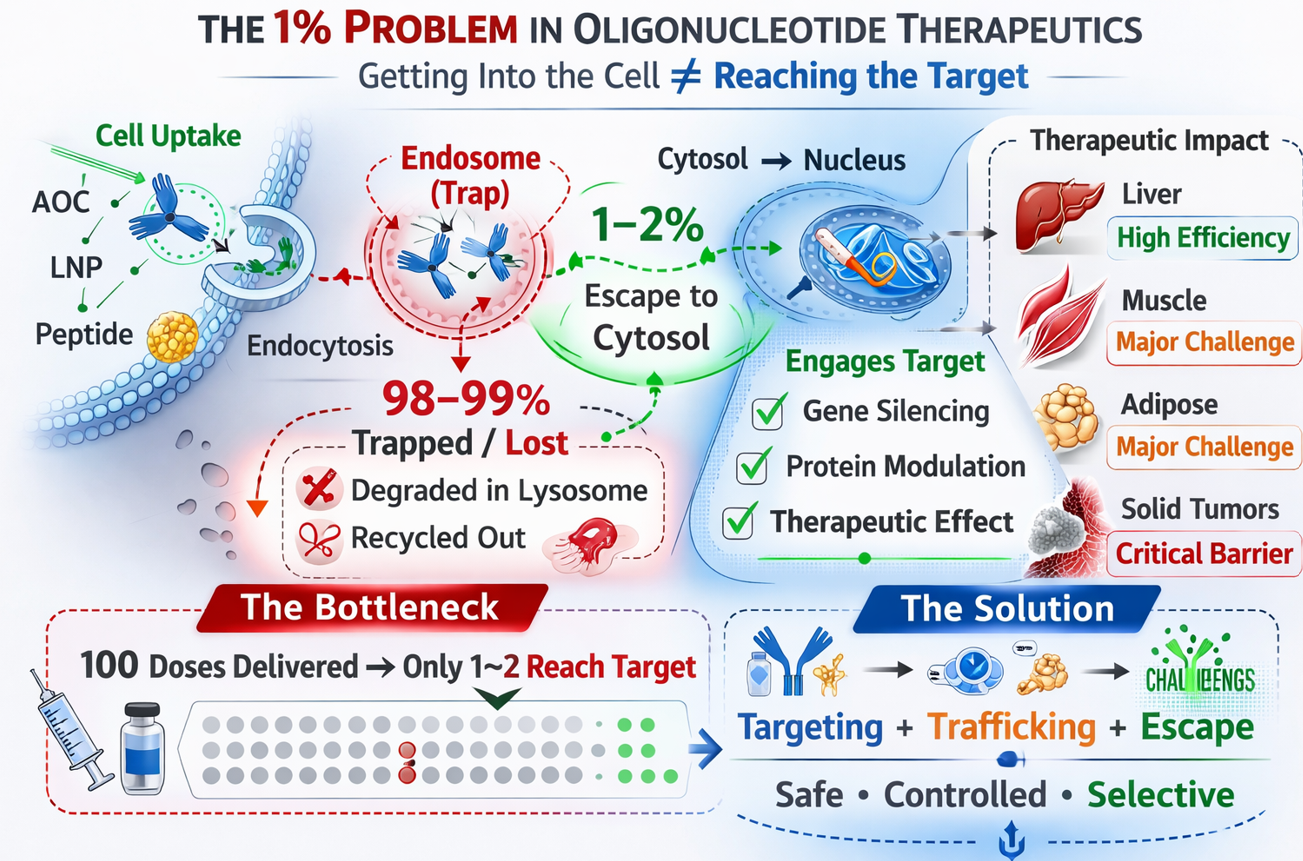
The advent of oligonucleotide therapeutics has ushered in a new era of precision medicine, promising advances in treating various diseases at the genetic level. While these innovative therapies can enter cells with remarkable efficiency via targeted delivery, their success hinges on a complex and often overlooked challenge: endosomal escape. This phenomenon significantly limits the therapeutic potential of these drugs, primarily because, once inside the cell, approximately 1- 2% escapes from endosomes, the organelles that persistently trap therapeutic agents. The remaining majority either degrade in lysosomes, are recycled out of the cell, or get stuck in non-productive compartments, effectively nullifying their purpose.
The implications of this 1% problem are profound. This inefficiency intracellular delivery in liver-targeted therapies is masked by high exposure and efficient uptake. However, in other tissues, such as muscle, adipose tissue, or solid tumors, where delivery is inherently challenging, the loss of this small fraction becomes catastrophic. Thus, the challenge has shifted from merely delivering agents into the body to ensuring they reach and engage the target. A fundamental understanding emerges from this dilemma: cell entry does not equate to therapeutic activity. Most current delivery strategies, including advanced systems like antibody-oligonucleotide conjugates (AOCs), have made significant strides in facilitating cellular uptake. However, they largely fail to address key barriers such as intracellular trafficking and endosomal escape—critical factors that ultimately determine whether a therapeutic agent can exert its intended action.
The natural inclination is to simply increase the rate of escape from endosomes. However, this approach faces other challenges. Mechanisms designed to disrupt endosomal membranes often result in cellular damage, trigger unwanted immune responses, and narrow the therapeutic window. Thus, the challenge is to develop strategies that improve escape in a safe and targeted manner. In conclusion, the landscape of oligonucleotide therapeutics holds immense promise, but realizing its potential requires tackling the endosomal escape dilemma head-on. As the field evolves, those who can successfully bridge the gap between effective cellular entry and therapeutic activity may unlock unprecedented breakthroughs, paving the way for a new generation of molecular medicines capable of addressing some of today’s most challenging health concerns. Addressing the 1% problem is not just a technical challenge; it is a critical steppingstone towards transforming the future of therapies targeting RNA and, by extension, enhancing our arsenal against a myriad of diseases.